Guide · 9 minute read
Turmeric 10,000 mg Equivalent vs Curcumin Extract: What the Numbers Mean
Why a very large front-of-pack number is not the same as the amount physically in the capsule — and how to read the figures side by side.
Written by Farhan Baig, founder of Zamzam Wellness Herbs
Published: 5 September 2026 · Last updated: 5 September 2026
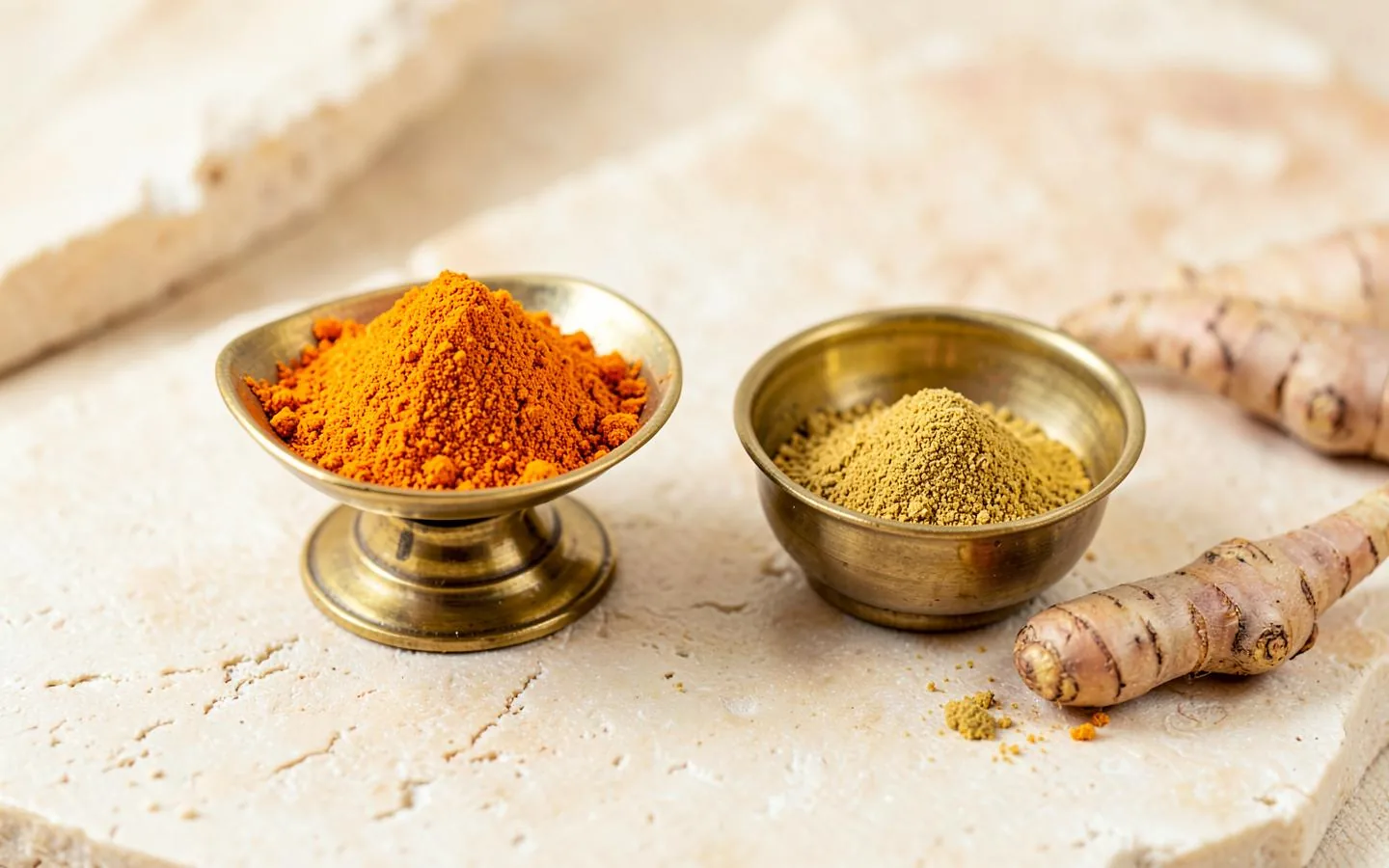
Browse curcumin and turmeric supplements in the UK and you will quickly see striking front-of-pack numbers: 10,000 mg, sometimes more. Alongside them, other products lead with a percentage — 95%, for example — attached to a much smaller milligram figure. These two ways of describing a product measure different things, and this guide explains the distinction so you can compare labels on a like-for-like basis.
Why a 10,000 mg headline can mislead
The natural assumption is that a number on the front of a pack is the amount physically present in each capsule or daily serving. With turmeric products that is frequently not the case. A capsule is physically small — most hold well under a gram of material — so a 10,000 mg figure cannot literally describe the contents of one capsule.
When a large number appears on the front of a turmeric product, it usually refers to an equivalent amount of raw plant material, not the weight of the extract in the capsule. That is a legitimate way to describe a concentrated extract, but it is easy to misread if you assume it is the actual amount present.
What "equivalent to" means in plain English
"Equivalent to" — sometimes called a raw-herb equivalent or whole-herb equivalent — describes how much starting plant material a concentrated extract is considered to represent. An extract is made by processing a larger quantity of raw material down into a smaller quantity of concentrate, so the description is about the input, not the final weight in the capsule.
The phrase tells you something about concentration. What it does not tell you, on its own, is the actual weight of extract present, or how much of any particular constituent that extract contains.
Extract ratios, with a hypothetical example
Equivalent figures usually come from an extract ratio, written as something like 20:1. The ratio compares the weight of starting plant material with the weight of finished extract.
A purely hypothetical illustration: if a product used a 20:1 extract, then 500 mg of that extract could be described as "equivalent to 10,000 mg" of raw plant material (500 × 20). This is simple arithmetic on the stated ratio — it is not a quality judgement, and it is not a description of our product. Different raw materials vary naturally, so an equivalent number derived from a ratio is a description of concentration, not a measured constituent content.
Actual extract weight versus raw-herb equivalent
Two different numbers can therefore describe the same ingredient:
- Actual extract weight — the milligrams of extract physically present per capsule or per serving. This is the figure that can be weighed and compared directly.
- Raw-herb equivalent — the amount of starting plant material the extract represents, derived from the extract ratio.
When comparing two products, the actual extract weight is usually the more useful starting point, because it is a directly comparable physical quantity. An equivalent number only becomes comparable when you also know the ratio behind it.
What a standardisation percentage tells you
A standardisation figure is separate from both the ratio and the equivalent number. Standardisation means the extract is produced to contain a stated minimum proportion of a particular constituent or group of constituents.
A percentage only becomes meaningful once the label or specification states what is being standardised. Our Curcumin 95 Explained guide covers this in detail: a "95%" figure describes the composition of the extract it is attached to, and should be read together with the actual amount of that extract.
Why a percentage plus an actual amount is more informative
A large equivalent number on its own tells you the extract is concentrated, but nothing about what it contains. A standardisation percentage combined with an actual extract amount gives you two concrete, comparable facts: how much extract is present, and what proportion of it is the named constituent.
That said, no single format is automatically "better" in every respect — products are formulated in different ways for different reasons. The practical point is simply that a percentage and an actual milligram amount, stated together, give a shopper more to compare than a large equivalent figure alone.
Serving basis: per capsule or per daily serving
Whatever numbers a label uses, they can only be compared on the same serving basis. One product may state amounts per capsule; another may state them per daily serving of two or more capsules. A 500 mg figure "per serving" is not the same as 500 mg per capsule, and two products cannot be compared fairly until the basis is matched.
Reading common label phrases side by side
| Label phrase | What it tells you | What it does not tell you |
|---|---|---|
| 10,000 mg equivalent | The extract is concentrated; the stated amount of raw plant material it represents. | The actual extract weight present, or the content of any specific constituent. |
| 500 mg extract | The actual weight of extract per capsule or serving — a directly comparable figure. | What proportion of that extract is any particular constituent, unless standardisation is also stated. |
| 95% curcuminoids | The extract is standardised so that at least 95% of it is the named constituent group. | The actual milligram amount of the extract — the percentage needs an amount beside it. |
| 2 capsules per serving | The basis on which the label amounts are presented. | Whether comparable products use the same basis — always match serving sizes before comparing. |
How to compare two labels fairly
- Identify the ingredient form — whole turmeric powder, turmeric extract, or a curcuminoid-rich extract. Our Curcumin vs Turmeric guide explains the difference.
- Find the actual extract weight in milligrams, per capsule or per serving.
- Convert or discount equivalent numbers — an "equivalent to" figure is only comparable once you know the ratio behind it.
- Check any standardisation percentage and confirm what it refers to.
- Match the serving basis — per capsule versus per daily serving — before comparing amounts.
- Read companion ingredients separately — ingredients such as Boswellia serrata and black pepper extract are distinct line items with their own amounts; see Curcumin and Boswellia Explained.
Our guide to reading a curcumin supplement label applies the same discipline across the entire panel, including capsule counts, servings and front-of-pack claims.
A worked example: how Curcumin Supreme Trio is labelled
Our own Curcumin Supreme Trio label currently lists:
- Curcumin 95% — 500 mg
- Boswellia Serrata — 490 mg
- BioPerine® / black pepper extract — 10 mg
The bottle contains 120 vegan capsules, and the label suggests 2 capsules daily, equivalent to 60 servings.
These are the amounts listed on the label. They are not stated per capsule unless separately confirmed, and we do not interpret "Curcumin 95% 500 mg" as meaning 500 mg of pure curcuminoids. Note that the label expresses the turmeric-derived ingredient as a standardised percentage with an actual amount — it does not use a raw-herb equivalent figure.
To see the full formulation, visit Curcumin Supreme Trio.
The takeaway
The biggest number on a pack is not automatically the most useful number. A large "equivalent" figure describes concentration of input material; a standardisation percentage describes composition; and an actual milligram amount describes what is physically present. Read together — ingredient form, actual extract amount, standardisation and serving basis — they let you compare any two products on equal terms.
Safety note
Food supplements should not be used as a substitute for a varied, balanced diet and a healthy lifestyle.
If you are pregnant or breastfeeding, taking medication, have a medical condition or are under medical supervision, seek appropriate professional advice before using food supplements.